

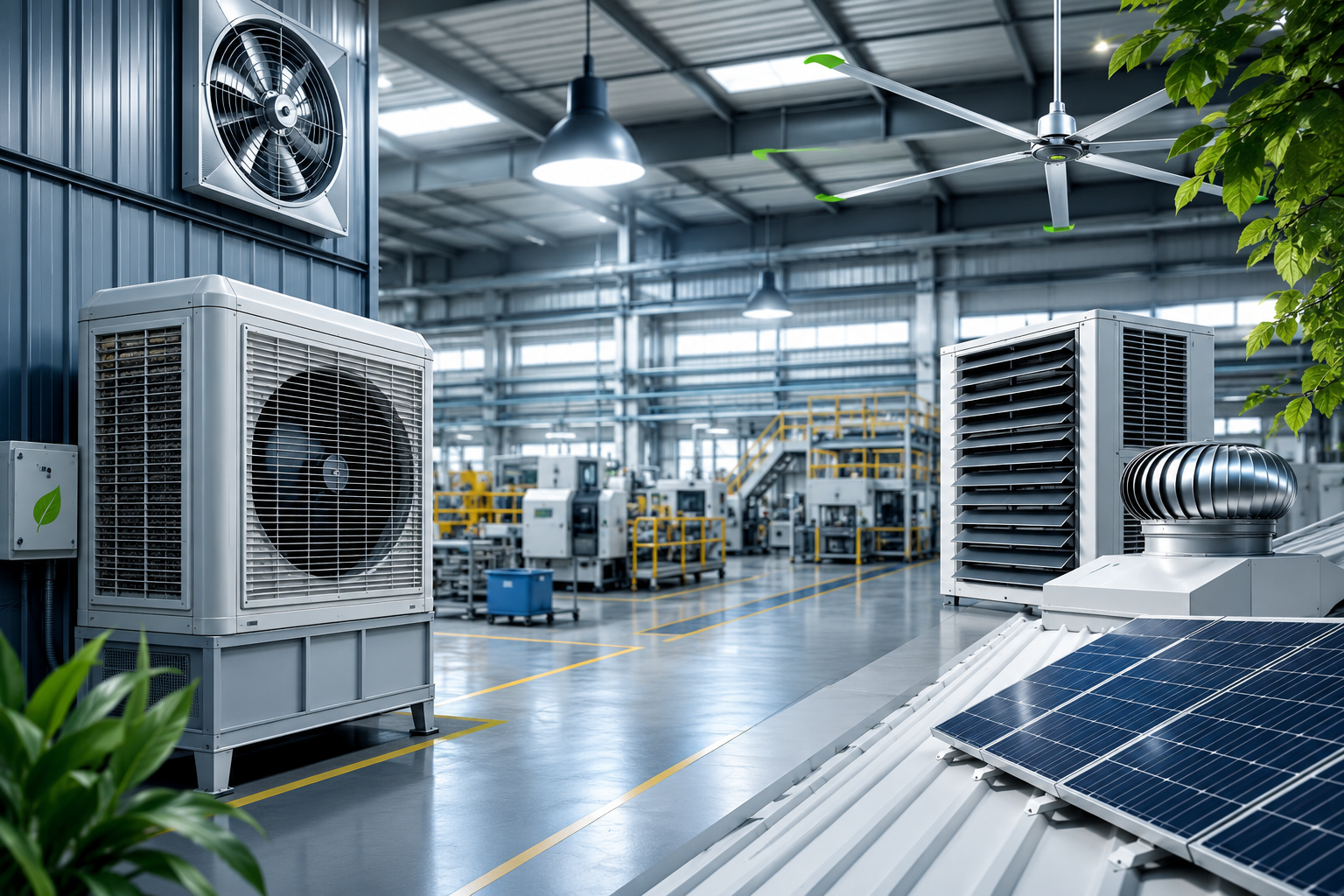
Factory floors are notoriously difficult to cool. Between heat-generating machinery, dense building materials, and expansive square footage, relying on traditional HVAC systems is often prohibitively expensive. As energy costs rise and environmental regulations tighten, plant managers must pivot to cooling strategies that move massive volumes of air without driving up the power bill.
Why Energy-Efficient Cooling is Non-Negotiable
Running a factory safely requires maintaining ambient temperatures that prevent equipment overheating and protect worker health. However, doing so inefficiently destroys profit margins. Upgrading to optimized industrial fans addresses three critical operational goals:
- Drastic cost reduction: Industrial fans consume a fraction of the electricity required by refrigerated air conditioning.
- Regulatory compliance: Maintaining proper ventilation clears out hazardous fumes and suspended particulate matter.
- Productivity boosts: Thermal stress reduces worker efficiency by up to 20% and significantly increases the risk of workplace accidents.
Top Energy-Saving Solutions for Factory Floors
Not every zone in a manufacturing plant has the same cooling requirements. The most energy-efficient approach uses the right equipment for specific localized needs rather than attempting a blanket cooling strategy.
1. Heavy-Duty Exhaust Fans
Trapped heat near the ceiling radiates downward, raising the ambient temperature of the entire building. Heavy-duty exhaust fans are the most efficient way to achieve rapid air exchange. By continuously pulling stale, superheated air and chemical fumes out of the building, they create a natural vacuum that draws fresh, cooler air in from the outside.
2. Industrial Man Coolers
Cooling an entire 50,000-square-foot warehouse when only 10 workers are on the floor is a massive waste of electricity. Man coolers provide high-velocity, targeted airflow directly to specific workstations or high-heat zones (like near furnaces or assembly lines). Because they cool the personnel rather than the empty space, they offer massive energy savings.
3. Tube Axial Fans
When you need to push large volumes of air through ductwork or ventilate confined spaces, tube axial fans are highly efficient. Their cylindrical housing minimizes airflow loss and provides a highly directional stream, making them ideal for removing localized paint fumes, welding smoke, or process heat without requiring a massive power draw.
4. Air Circulators
Stagnant air makes a factory feel much hotter than the actual temperature. Heavy-duty air circulators break up thermal stratification (layers of hot and cold air) and keep the air moving constantly. The continuous breeze accelerates sweat evaporation on workers' skin, making the environment feel up to 8°F (4°C) cooler with minimal electrical input.
Choosing the Right Fan for the Job
| Solution | Primary Function | Best For |
|---|---|---|
| Exhaust Fans | Rapid air exchange | Pushing out trapped heat and fumes |
| Man Coolers | Targeted spot cooling | High-heat workstations |
| Tube Axial | Ducted ventilation | Confined spaces and smoke removal |
| Air Circulators | Ambient air movement | General warehouse comfort |
Maximizing Your Energy Savings
Installing the right fans is only the first step. To ensure your cooling system operates at peak efficiency:
- Integrate VFDs (Variable Frequency Drives): VFDs allow you to adjust fan speeds based on real-time temperature sensors, rather than running them at 100% capacity constantly.
- Optimize Placement: Exhaust fans should be placed high on walls or roofs where heat naturally rises, while intake vents should be placed low on the shaded side of the building.
- Routine Maintenance: Dirty blades and unlubricated bearings force motors to work harder. Regular cleaning prevents energy creep.
Efficient cooling is about working smarter, not just blowing harder. By strategically deploying heavy-duty fans tailored to specific factory zones, you can drastically improve workplace conditions while keeping operational costs firmly under control.