

Introduction
Industrial safety and workplace efficiency have become major priorities for modern manufacturing industries. Proper factory ventilation systems are essential for maintaining healthy air quality, reducing heat stress, controlling airborne contaminants, and ensuring compliance with industrial safety regulations. Manufacturing plants, warehouses, automotive facilities, pharmaceutical units, and engineering industries rely on efficient ventilation systems to create safe and productive working environments.
Industrial ventilation solutions improve airflow circulation, regulate indoor temperatures, and remove harmful fumes and dust particles from production areas. Proper ventilation management also helps improve employee comfort, machine performance, and operational reliability.
Why Factory Ventilation Is Critical for Industrial Safety
Industrial ventilation plays a vital role in maintaining workplace safety and operational efficiency. Poor airflow inside factories can lead to excessive heat buildup, smoke accumulation, airborne contaminants, and reduced employee productivity. A well-designed ventilation system improves air circulation while supporting healthier working conditions.
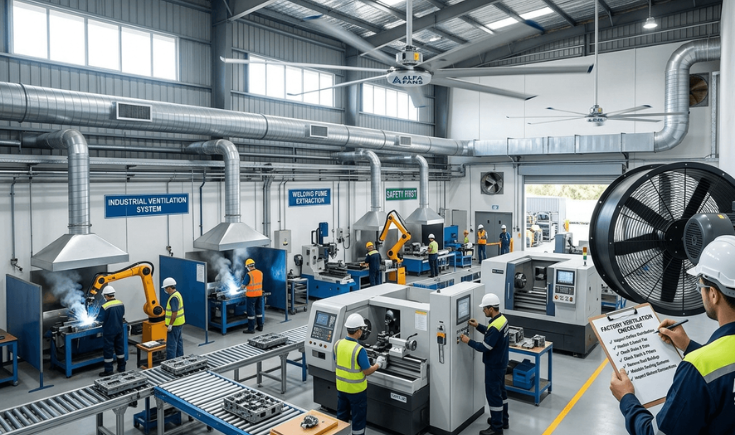
Industries using heavy machinery, welding systems, conveyor lines, robotic systems, and chemical processing equipment require proper ventilation to maintain a safe production environment. Modern manufacturing facilities increasingly depend on
industrial exhaust fans
, air circulation systems, and industrial cooling solutions for effective airflow management.Factory Ventilation Checklist for Manufacturing Facilities
Every industrial facility should follow a proper ventilation checklist to maintain safe operations and improve ventilation performance.
- Inspect airflow distribution across production areas
- Monitor industrial exhaust fan performance
- Check ventilation ducts and air filters regularly
- Remove dust buildup and airborne contaminants
- Maintain cooling systems for temperature control
- Inspect electrical connections and fan motors
- Ensure proper airflow circulation in storage zones
Routine inspections help improve industrial ventilation efficiency while reducing downtime and maintenance costs.
Importance of Industrial Exhaust Fans
Industrial exhaust fans are essential for removing heat, fumes, smoke, and airborne particles from manufacturing environments. Industries such as automotive manufacturing, pharmaceuticals, textiles, food processing, and metal fabrication rely heavily on industrial exhaust systems to maintain clean indoor air quality.
Properly installed ventilation systems also help prevent moisture buildup and protect machinery from overheating. Reliable exhaust systems contribute to safer and more efficient industrial operations.
Improve Airflow Management Across Production Areas
Efficient airflow management is necessary for maintaining balanced air circulation throughout industrial facilities. Uneven airflow can create hotspots that affect worker comfort and reduce machine efficiency.
- Use industrial air circulators for large workspaces
- Install ventilation systems near heat-generating equipment
- Improve fresh air intake across production floors
- Maintain proper exhaust airflow in enclosed areas
Balanced airflow circulation improves operational safety and workplace productivity.
Preventive Maintenance for Ventilation Systems
Preventive maintenance helps
industrial ventilation systems
operate efficiently for longer periods. Dust accumulation and clogged filters can reduce airflow efficiency and increase energy consumption.Factories should regularly inspect industrial fans, ventilation ducts, air filters, and cooling systems to identify potential problems early. Preventive maintenance minimizes equipment failure while supporting continuous manufacturing operations.
Industrial Cooling Solutions for Worker Comfort
High-temperature manufacturing facilities require efficient cooling and ventilation systems to maintain safe working conditions. Excessive heat exposure can impact employee productivity, increase fatigue, and affect machine performance.
Modern
industrial cooling solutions
such as HVLS fans, air circulators, and exhaust ventilation systems help regulate indoor temperatures while improving employee comfort and workplace efficiency.Noise Reduction and Energy Efficiency
Modern ventilation systems are designed to improve airflow while reducing operational noise and electricity consumption. Energy-efficient industrial fans equipped with advanced motors and aerodynamic blades help industries optimize airflow management with lower operating costs.
Smart ventilation systems with automated airflow controls and predictive maintenance technology further improve operational efficiency while supporting sustainable industrial practices.
Role of Industrial Safety Standards in Ventilation Planning
Industrial ventilation systems must comply with workplace safety regulations and operational safety standards. Proper
airflow management
reduces health risks associated with smoke, dust, and chemical fumes.Ventilation planning should include emergency airflow systems, smoke extraction systems, and safe ventilation layouts for hazardous work zones. Combining industrial ventilation with machine safety measures creates safer production environments.
Future of Smart Industrial Ventilation Systems
Modern industries are adopting smart ventilation systems equipped with automated controls, airflow monitoring sensors, and energy-efficient technologies. These systems help businesses improve airflow performance while reducing maintenance costs and energy consumption.
Smart industrial ventilation systems support sustainable manufacturing operations and help industries maintain safer and more productive workspaces.
Conclusion
A proper
factory ventilation checklist
is essential for maintaining safe industrial operations, improving employee health, and supporting operational efficiency. Industrial ventilation systems, exhaust fans, airflow management solutions, and preventive maintenance practices all contribute to safer and more productive manufacturing environments.By investing in reliable ventilation systems and following proper maintenance practices, industries can improve workplace safety, indoor air quality, and long-term operational performance.