

Introduction
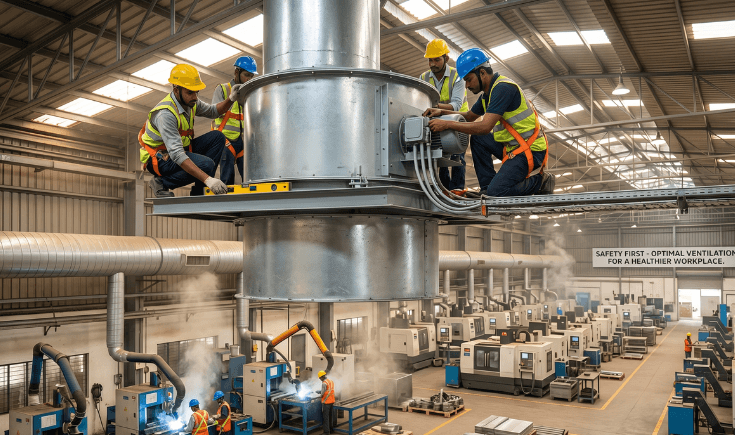
Industrial exhaust fans are among the most important components of modern industrial ventilation systems. They help remove hot air, smoke, dust, fumes, moisture, and airborne contaminants from factories, warehouses, manufacturing plants, pharmaceutical facilities, food processing units, and engineering workshops. Proper industrial exhaust fan installation is essential for maintaining indoor air quality, improving worker comfort, enhancing workplace safety, and ensuring energy-efficient operations.
However, many businesses invest in high-quality industrial exhaust fans but fail to achieve optimal performance due to installation errors. Even minor installation mistakes can reduce airflow efficiency, increase energy consumption, create ventilation imbalances, and lead to frequent maintenance issues. Understanding these common industrial exhaust fan installation mistakes can help industries in India maximize ventilation performance while reducing long-term operating costs.
Why Proper Industrial Exhaust Fan Installation Matters
Industrial exhaust fans are designed to maintain healthy airflow by removing contaminated air and replacing it with fresh air. Proper installation ensures that ventilation systems operate efficiently and provide adequate air exchange rates throughout the facility. A well-installed industrial exhaust fan helps reduce indoor temperatures, improve air circulation, control humidity levels, and minimize the buildup of harmful airborne particles.
Incorrect installation can compromise the effectiveness of an industrial ventilation system in india and result in uneven airflow, excessive power consumption, and poor indoor air quality. Proper planning and professional installation are essential for achieving the desired ventilation performance and workplace safety standards.
Choosing the Wrong Industrial Exhaust Fan Capacity
One of the most common industrial exhaust fan installation mistakes is selecting a fan with inadequate or excessive airflow capacity. Many facility owners purchase exhaust fans without accurately calculating the airflow requirements of their premises. An undersized fan may fail to remove heat, smoke, and contaminants efficiently, while an oversized fan can create pressure imbalances and increase electricity consumption.
Determining the correct
exhaust fan capacity in india
requires evaluating factors such as facility size, ceiling height, heat generation, machinery load, occupancy levels, and production processes. Proper airflow calculations help ensure that industrial ventilation systems provide optimal performance while maintaining energy efficiency.Incorrect Placement of Industrial Exhaust Fans
The location of an industrial exhaust fan significantly influences its ability to remove unwanted air contaminants. Improper placement can create ventilation dead zones where heat, smoke, and pollutants accumulate. Many installations fail because exhaust fans are positioned without considering airflow direction and contaminant sources.
Industrial exhaust fans should be strategically installed near heat-generating machinery, production areas, welding stations, chemical processing zones, or locations where airborne contaminants are most concentrated. Proper placement ensures smooth airflow movement throughout the facility and improves overall ventilation effectiveness.
Ignoring Fresh Air Intake Requirements
Effective industrial ventilation depends on maintaining a balance between exhausted air and incoming fresh air. A common installation mistake is focusing only on exhaust air removal while neglecting fresh air intake provisions. Without adequate make-up air, negative pressure can develop inside the facility, reducing exhaust fan efficiency and increasing operating costs.
Properly designed
Industrial Ventilation Systems
incorporate dedicated fresh air entry points that allow clean outdoor air to replace exhausted air. This balanced airflow approach improves ventilation performance, enhances worker comfort, and supports healthier indoor air quality.Improper Ductwork Design and Installation
Ductwork is a critical component of industrial exhaust systems. Poor duct design can significantly reduce airflow efficiency and place unnecessary strain on exhaust fans. Long duct runs, sharp bends, undersized ducts, and poorly sealed joints increase airflow resistance and reduce system performance.
Industrial exhaust fan systems should be designed with smooth airflow pathways and properly sized ducts to minimize pressure losses. Efficient duct design allows exhaust fans to operate effectively while reducing energy consumption and maintenance requirements.
Failure to Evaluate Environmental Conditions
Every industrial facility has unique environmental conditions that affect ventilation requirements. Manufacturing plants, chemical facilities, pharmaceutical units, food processing industries, and warehouses often operate under different temperature, humidity, and contamination levels.
Installing a standard industrial exhaust fan without assessing these conditions can result in premature equipment wear and reduced performance. Factors such as corrosive gases, airborne dust, moisture exposure, and extreme temperatures should be considered when selecting and installing industrial ventilation equipment.
Overlooking Electrical Safety Requirements
Electrical safety is a crucial aspect of industrial exhaust fan installation. Improper wiring, inadequate power supply, incorrect motor protection, and poor grounding practices can create serious operational and safety risks. Electrical faults may cause equipment damage, production downtime, or workplace hazards.
Industrial exhaust fan installations india
should always comply with applicable electrical standards and manufacturer recommendations. Proper electrical design helps ensure safe operation, reliable performance, and long-term system durability.Neglecting Vibration and Noise Management
Industrial exhaust fans generate mechanical vibrations during operation. If vibration control measures are not implemented during installation, excessive noise and structural stress can develop over time. Uncontrolled vibration may damage support structures, reduce equipment lifespan, and create uncomfortable working conditions.
Using appropriate mounting systems, vibration isolators, and structural supports helps maintain smooth operation while minimizing noise levels and mechanical wear. Proper vibration management contributes to better equipment reliability and workplace comfort.
Skipping Airflow Testing and System Evaluation
Many industrial exhaust fan installations are completed without conducting airflow testing or performance verification. This oversight can leave hidden issues undetected, including airflow restrictions, pressure imbalances, and inadequate ventilation coverage.
Post-installation testing helps verify that the exhaust fan delivers the required airflow and meets ventilation objectives. Performance evaluations allow facility managers to identify potential improvements and optimize overall system efficiency.
Ignoring Preventive Maintenance Planning
Even the best industrial exhaust fan installation requires regular maintenance to sustain long-term performance. Dust accumulation, worn bearings, clogged components, and mechanical wear can gradually reduce ventilation efficiency and increase energy usage.
Establishing a preventive maintenance schedule helps identify potential issues before they become costly failures. Routine inspections, cleaning, lubrication, and performance monitoring extend equipment lifespan and improve system reliability.
Benefits of Professional Industrial Exhaust Fan Installation
Professional installation ensures that industrial exhaust fans operate according to design specifications while meeting facility-specific ventilation requirements. Experienced installers assess airflow needs, determine ideal fan locations, evaluate duct design, and verify compliance with safety regulations.
Proper installation improves indoor air quality, reduces operating costs, enhances workplace safety, and maximizes the return on investment for industrial ventilation systems. Businesses that invest in professional installation often experience better system performance and lower long-term maintenance expenses.
Conclusion
Industrial exhaust fans play a vital role in maintaining safe, efficient, and productive industrial environments. However, their effectiveness depends heavily on correct installation practices. Common mistakes such as incorrect fan sizing, poor placement, inadequate fresh air intake, improper ductwork design, neglected safety requirements, and insufficient maintenance planning can significantly reduce ventilation performance.
By understanding and avoiding these industrial exhaust fan installation mistakes, businesses across India can improve airflow management, enhance worker safety, reduce energy consumption, and achieve long-term operational efficiency. Investing in proper