

Introduction
Industrial fans are essential for maintaining safe and productive environments in factories, warehouses, manufacturing plants, and industrial facilities. Proper industrial ventilation systems help improve airflow, control heat buildup, remove fumes, and maintain indoor air quality. However, poor maintenance and unsafe operating practices can reduce ventilation efficiency and increase workplace risks. Following industrial fan safety practices helps businesses improve worker safety, reduce downtime, and extend the lifespan of industrial ventilation equipment.
Importance of Industrial Fan Safety
Industrial fans operate continuously in demanding environments where dust, heat, moisture, and airborne contaminants are common. Unsafe industrial ventilation systems can lead to electrical hazards, overheating, mechanical failures, and airflow imbalance. In factories and warehouses, maintaining safe ventilation systems is important for ensuring employee comfort and supporting efficient production operations.
Regular Inspection and Preventive Maintenance
Routine
industrial fan maintenance
is one of the most effective ways to improve workplace safety and ventilation efficiency. Factories should inspectindustrial exhaust fans
, axial fans, centrifugal blowers, andHVLS fans
regularly to identify vibration issues, loose components, worn bearings, or damaged fan blades.- Inspect motors and electrical connections regularly
- Check fan blades for wear and damage
- Monitor unusual vibration or noise
- Lubricate moving components when required
- Replace worn-out belts and bearings
Preventive maintenance helps reduce unexpected equipment failure and improves airflow management across industrial facilities.
Ensure Proper Installation of Industrial Fans
Correct installation of industrial fans is important for maintaining reliable airflow and safe operation. Poorly installed industrial ventilation systems can create vibration problems, uneven airflow distribution, and excessive noise. Industrial exhaust fans and heavy-duty blowers should always be installed by trained professionals using proper mounting systems and electrical safety measures.
Correct fan placement improves airflow circulation and helps maintain consistent cooling and ventilation performance throughout manufacturing facilities.
Use Safety Guards and Protective Covers
Industrial fans contain high-speed rotating blades that can create serious workplace hazards if left exposed. Installing safety guards and protective mesh covers helps prevent accidental contact and protects workers operating near ventilation equipment.
- Install protective covers on all exposed fan blades
- Inspect safety guards regularly for damage
- Ensure guards remain tightly secured
- Replace damaged protective covers immediately
Industrial fan safety guards improve operational safety while allowing smooth airflow circulation inside factories and warehouses.
Monitor Electrical Safety and Motor Performance
Electrical safety is a critical aspect of industrial ventilation management. Faulty wiring, overloaded circuits, and overheating motors can lead to equipment breakdowns and workplace hazards. Factories should regularly inspect control systems, power supply connections, and motor performance associated with industrial ventilation systems.
Energy-efficient industrial fans equipped with modern motor protection systems and variable frequency drives help improve airflow control while reducing energy consumption.
Keep Industrial Fans Clean for Better Airflow
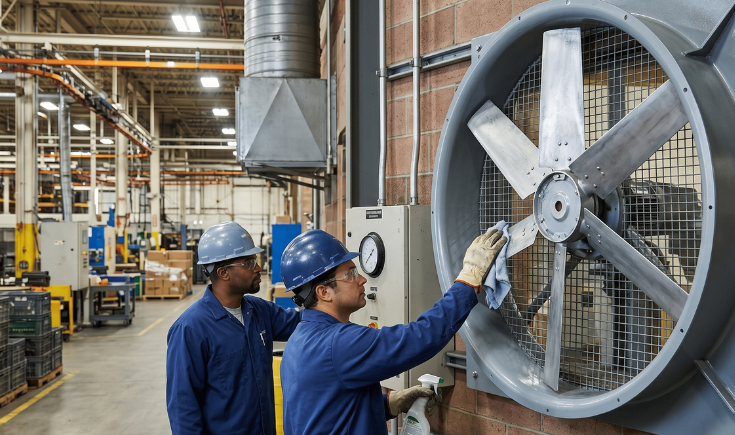
Dust accumulation on fan blades and ventilation ducts can reduce airflow efficiency and place additional strain on industrial fan motors. Regular cleaning helps maintain cooling performance and improves indoor air quality in manufacturing plants.
- Clean fan blades and ventilation ducts regularly
- Remove grease and airborne contaminants
- Inspect filters and airflow channels
- Maintain proper airflow circulation
Clean industrial ventilation systems improve operational efficiency while reducing energy costs and maintenance requirements.
Train Employees on Industrial Ventilation Safety
Employee awareness is essential for maintaining
industrial fan safety
in factories and warehouses. Workers should understand safe operating procedures, emergency shutdown methods, and warning signs such as unusual noise, overheating, or reduced airflow.Industrial safety training encourages employees to identify ventilation problems early and report maintenance issues before they affect operations.
Avoid Overloading Industrial Ventilation Systems
Industrial fans are designed to operate within specific airflow and load capacities. Overloading industrial ventilation systems can reduce efficiency and increase the risk of equipment failure. Factories should select industrial fans based on proper airflow requirements, facility size, and operational demands.
Choosing the right industrial cooling solution improves ventilation performance while reducing unnecessary strain on motors and fan components.
Upgrade to Energy-Efficient Industrial Fans
Modern energy-efficient industrial fans offer better
airflow management
while reducing electricity consumption. Advanced industrial ventilation systems with aerodynamic fan blades and smart controls improve cooling performance, workplace comfort, and ventilation efficiency.Upgrading older industrial exhaust fans helps improve indoor air quality, reduce maintenance costs, and support sustainable industrial operations.
Conclusion
Industrial fan safety is essential for factories, warehouses, and manufacturing facilities aiming to maintain safe and productive work environments. Regular maintenance, proper installation, electrical safety checks, and employee training help improve industrial ventilation efficiency while reducing workplace risks. By investing in reliable industrial ventilation systems and following proper safety practices, businesses can achieve better airflow management, improved worker comfort, and long-term operational reliability.