

The Evolution of Industrial Cooling
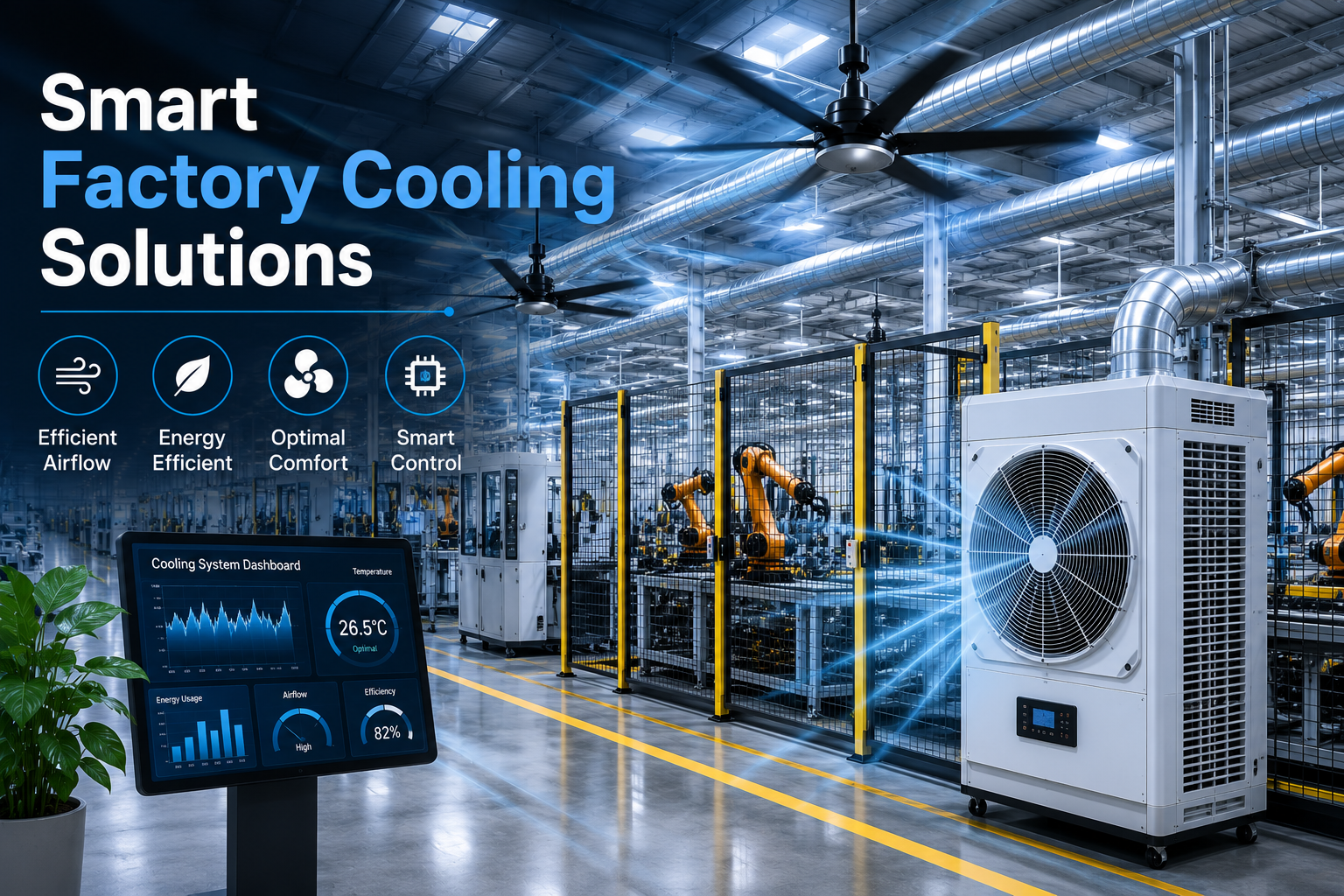
The transition toward Industry 4.0 has revolutionized how modern manufacturing floors operate, integrating robotics, advanced automation, and real-time data analytics. For heavy industrial fabrication facilities—particularly those mitigating the severe thermal conditions found in Dubai and across the UAE—relying on traditional, constantly running exhaust fans is an inefficient approach. Smart factory cooling solutions are bridging this gap, providing dynamic, responsive climate control.
Unlike legacy setups, smart ventilation systems eliminate the guesswork and energy waste associated with fixed-speed air circulation. By leveraging a continuous feedback loop of environmental data, these systems ensure that heavy-duty fans and centrifugal blowers operate solely at the exact capacity required to maintain strict thermal safety parameters.
Core Components of an Automated Ventilation Setup
Upgrading a plant to a smart cooling ecosystem requires integrating heavy industrial machinery with sensitive digital controls. This fusion guarantees that cooling resources are deployed efficiently across the fabrication floor. The primary components include:
- IoT Environmental Sensors: Strategically placed throughout the factory floor, these units constantly monitor ambient temperatures, humidity levels, and particulate matter concentrations, sending real-time data back to a central controller.
- Variable Frequency Drives (VFDs): These are essential for automation. VFDs adjust the motor speed of tube axial and heavy-duty exhaust fans on the fly, eliminating the "all-or-nothing" operation of traditional motors.
- Centralized Building Management Integration: The brain of the operation, where software algorithms interpret sensor data and seamlessly adjust airflow trajectories to combat localized heat buildup around heavy machinery.
Strategic Advantages for Fabrication Plants
The immediate impact of installing automated climate management is drastic energy reduction. Because fans only ramp up to peak RPM during extreme heat spikes, power consumption curves flatten out considerably. Furthermore, maintaining a clean, professional aesthetic without unnecessary mechanical clutter becomes easier when airflow paths are dynamically optimized rather than over-engineered.
Beyond energy savings, smart cooling drastically extends the operational lifespan of the ventilation equipment itself. By avoiding continuous maximum-load operation, bearing wear, motor fatigue, and aerodynamic stall are all minimized, resulting in lower long-term maintenance costs and less unplanned plant downtime.
Comparing System Architectures
| Metric | Traditional Cooling Systems | Smart Factory Cooling Networks |
|---|---|---|
| Energy Consumption | High (Continuous maximum output) | Optimized (Demand-driven operation) |
| Response to Heat Spikes | Static (Cannot adapt without manual intervention) | Dynamic (Real-time automated adjustments) |
| Equipment Lifespan | Shorter due to continuous mechanical stress | Extended via variable speed control and VFDs |
| Data Analytics | None available | Full diagnostic reporting and predictive maintenance |
Conclusion
Integrating intelligent automation into environmental control is no longer a luxury for modern industrial setups; it is an operational necessity. As extreme heat presents ongoing challenges to structural longevity and worker safety, fabrication centers must adopt dynamic airflow solutions that actively respond to real-time variables.
At Alfa Fans, we specialize in delivering robust air handling equipment designed to integrate flawlessly into next-generation smart factories. From highly durable centrifugal blowers to specialized heavy-duty exhaust networks tailored for the UAE market, our high-performance solutions keep your manufacturing operations cool, clean, and uncompromisingly efficient.