

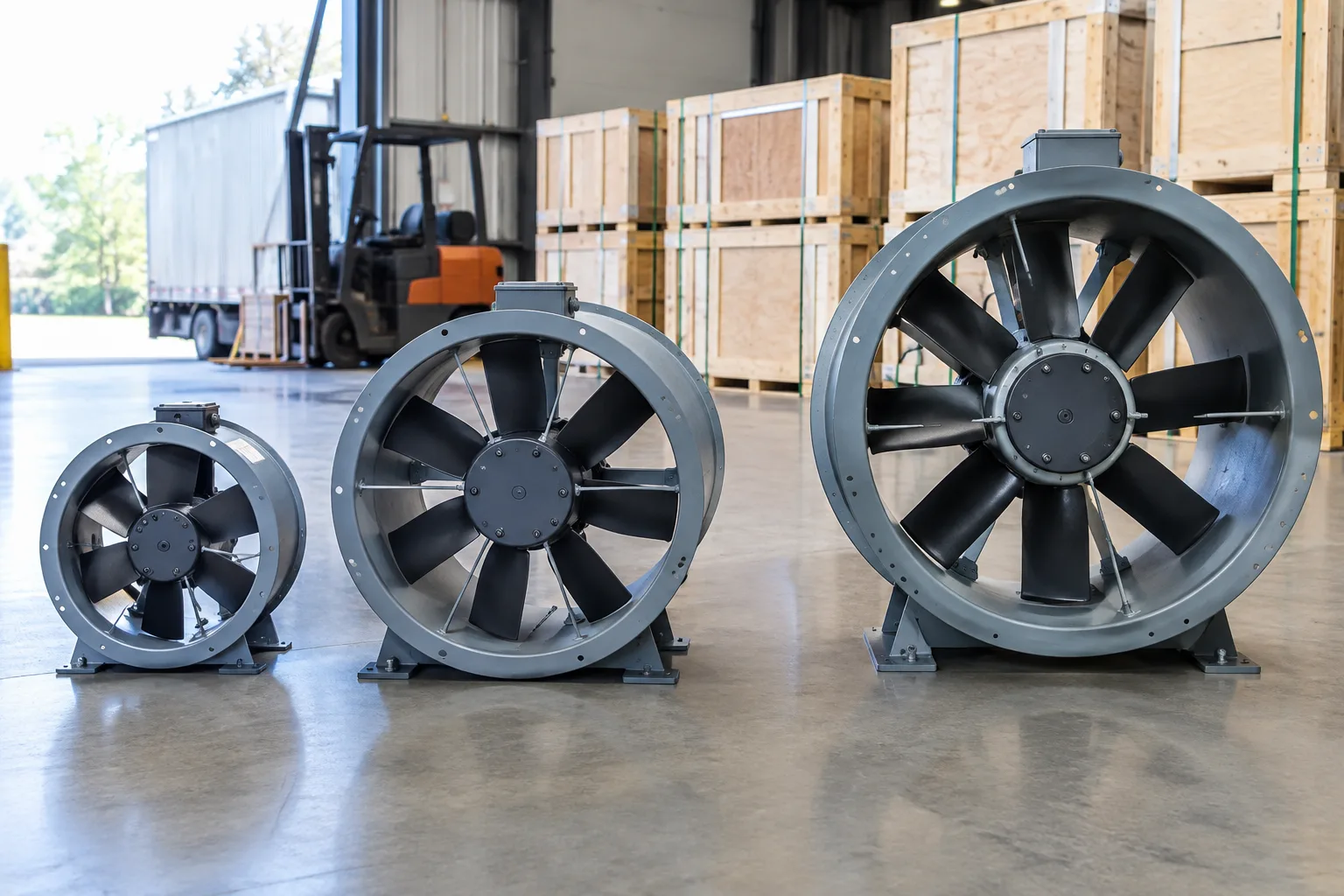
Tube axial fan sizes are stated by impeller diameter, but diameter alone does not decide air delivery. The air a tube axial fan moves is set by three things working together: impeller diameter, motor speed (RPM) and blade angle. The right size for your duct or wall opening is the one that delivers your required airflow against your system's static pressure, while fitting the opening without awkward transitions.
What tube axial fan sizes actually mean
A tube axial fan (also searched as a tube fan, tube fans or axial tube fan) is an axial impeller mounted inside a cylindrical casing. The casing guides air straight through the fan, which is why tube axial fans are easy to fit inline in ducts or directly into wall openings. When a catalogue lists a size, it usually refers to the impeller or casing diameter in millimetres. Two fans of the same nominal size can still give very different air delivery if one runs faster or has a steeper blade pitch.
So when you compare tube axial fan sizes, read the performance data (airflow at a given static pressure) rather than the diameter figure alone. You can see how the full range is built on our tube axial industrial fan page.
How diameter sets air delivery
Diameter has the biggest single effect on how much air a fan can move. The fan affinity laws, the standard relationships used across the fan industry, state that at the same speed, airflow rises with the cube of impeller diameter and pressure rises with the square of diameter. In practical terms, a modest step up in diameter gives a large step up in air delivery.
A larger impeller also lets the fan move the same volume at a lower speed, which generally means lower noise and less wear on bearings. The trade-off is a bigger casing, a larger wall opening or duct, and a heavier unit to support. For high-volume airflow in large sheds and warehouses, a larger diameter running at moderate speed is often the more comfortable choice than a small fan pushed hard.
How RPM changes airflow, static pressure and power
Speed is the second lever. The same fan affinity laws state that:
- Airflow varies directly with speed. Run the fan 10% faster and it moves roughly 10% more air.
- Static pressure varies with the square of speed.
- Power drawn varies with the cube of speed.
That cube relationship matters for running costs. Reducing speed by 20% lowers power demand to roughly half (0.8 x 0.8 x 0.8 is about 0.51). This is why buyers often ask whether an industrial axial fan can be run on a variable frequency drive, and why a correctly sized fan running at a sensible speed usually costs less to operate than an undersized fan running flat out. It is also why the motor must be matched to the impeller: a fan sped up without checking motor capacity can overload it.
How blade angle fine-tunes performance
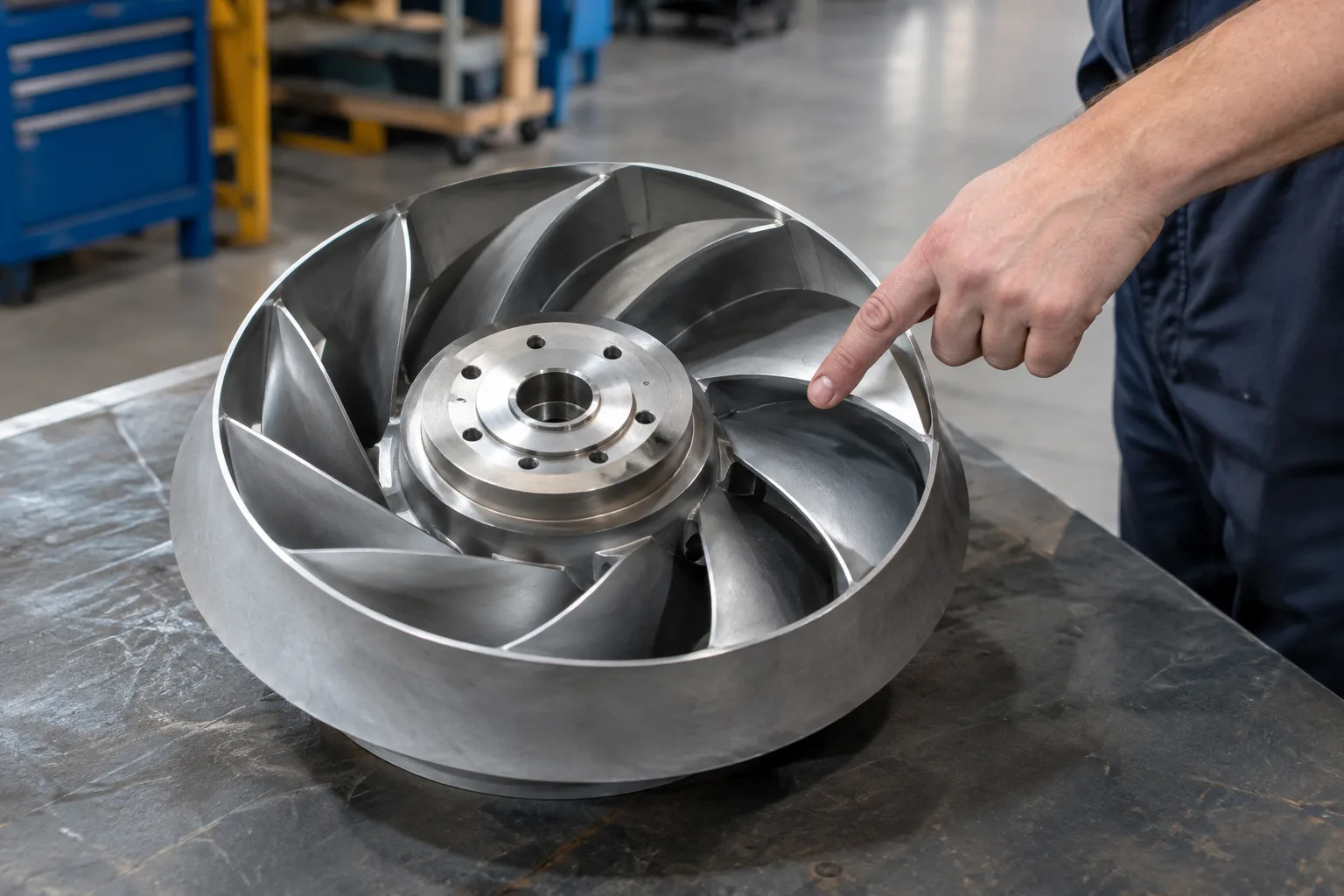
Blade angle (pitch) decides how much air each revolution pushes. A steeper angle moves more air per turn but needs more power and is more sensitive to system resistance. If the angle is too steep for the duct or filter resistance it faces, the blades can stall, causing noisy, unstable airflow and vibration. A shallower angle moves less air but handles resistance more steadily.
Blade shape matters as much as angle. Aerodynamically designed blades and an aerofoil impeller profile help convert motor power into air delivery with less turbulence and lower noise. The gap between blade tips and the casing also counts: a tight, consistent tip clearance helps a tube axial fan hold pressure, which is one reason casing accuracy is a sign of a well-made fan.
Matching tube axial fan sizes to your duct or wall opening
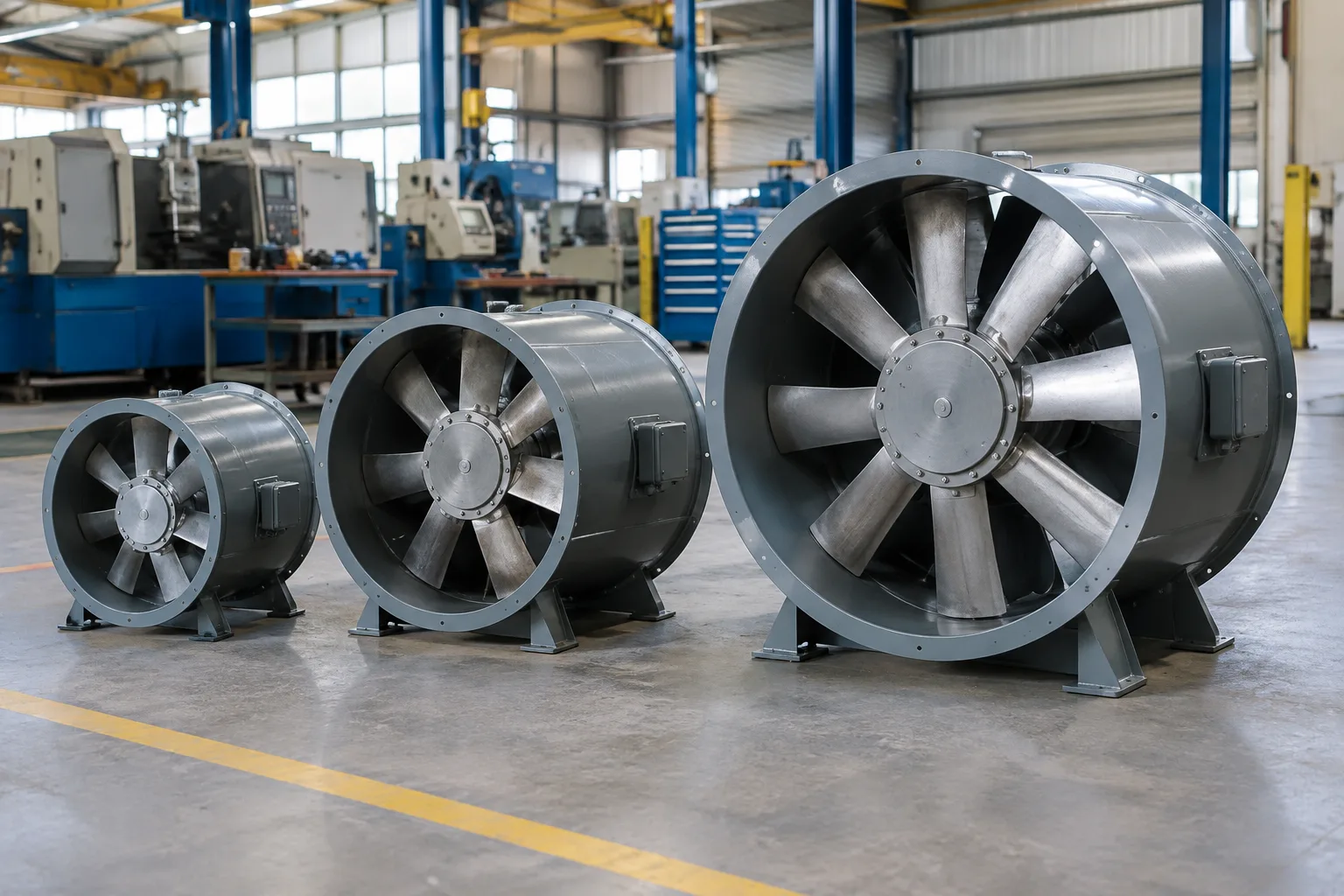
Once you know your required airflow and static pressure, the physical fit decides the final choice.
Duct-mounted tube axial fans
Match the fan diameter to the duct diameter wherever possible. Sudden size changes at the fan inlet or outlet add resistance and reduce real air delivery. If the fan and duct must differ, use a gradual transition piece rather than an abrupt step. Avoid placing a bend right against the fan inlet; a straight run of a few duct diameters before and after the fan is common industry guidance for steady airflow. Remember to add the resistance of dampers, filters, louvres and long runs when you calculate static pressure.
Wall openings and tube axial exhaust fans
A tube axial exhaust fan fitted in a wall should sit in an opening sized to its casing and mounting flange, sealed so air cannot leak back around the casing. An opening that is too large lets air recirculate and cuts effective exhaust. Think about where the replacement air will come from: an exhaust fan cannot remove air efficiently if the room has no inlet openings. For removing heat, fumes and smoke from shop floors, compare tube axial units with our heavy duty exhaust fans, which suit many wall-mounted extraction jobs.
One large fan or several smaller ones?
Several smaller fans spread airflow more evenly across a long wall and keep part of the ventilation running if one unit is under maintenance. One larger fan usually costs less to install and can run at a lower speed. The layout of your building, the position of heat sources and the available wall space normally decide this.
Common sizing mistakes to avoid
- Choosing by diameter alone without checking airflow at your actual static pressure.
- Ignoring system resistance from filters, louvres, bends and long ducts, so the installed fan delivers far less than its free-air rating.
- Oversizing the motor or speed to make up for a small impeller, which raises noise and power use.
- Forgetting the environment. Hot, dusty, humid, corrosive or flammable atmospheres change the choice of materials, motor and construction. Flammable atmospheres may call for a flameproof fan.
- Poor fit in the opening, leading to air leakage and recirculation.
For a broader look at where these fans perform best, read our guide on tube axial fan benefits and applications.
What to send tube axial fan manufacturers for a quotation
Good tube axial fan manufacturers will size the fan for you, but they need accurate information. Before you request a quotation, gather:
- Required airflow (in CFM or cubic metres per hour), or the room dimensions and the air changes per hour you need.
- Estimated static pressure, or a description of the ductwork, filters and louvres.
- Duct diameter or wall opening size, plus mounting position.
- Air temperature, dust, moisture or chemical content, and whether the area is classified as hazardous.
- Power supply details, noise limits and whether speed control is needed.
When comparing axial flow fan manufacturers, ask how performance figures are tested. Recognised test methods such as ISO 5801 and AMCA 210 describe how fan airflow and pressure should be measured, so asking which method a supplier's data follows helps you compare quotations fairly.
Why buyers choose Alfa Fans for tube axial fans
Alfa Fans has manufactured heavy duty industrial fans in Mumbai since 1981. As a Manufacturer, Wholesaler and Exporter, we supply tube axial fans, axial flow fans, exhaust fans, man coolers, air circulators and centrifugal blowers to factories, warehouses and project buyers across India. Our Research and Development team and engineering staff carry out application-specific fan selection, and we build custom made fans when a standard size does not suit your airflow and static-pressure requirements. Our accredited test facilities support the performance we quote, and we are known for timely delivery on bulk and project orders. Kompass featured Alfa Fans among its Top 10 Industrial Fan Manufacturers in India in 2024.
We also serve export buyers, including customers looking for tube axial fans in the UAE, Nepal and Bhutan.
If you are unsure which of the available tube axial fan sizes fits your duct or wall opening, share your application details with our engineers. Contact Alfa Fans to discuss your application requirements and request a quotation.
Frequently asked questions
How are tube axial fan sizes measured?
Tube axial fan sizes are usually stated by impeller or casing diameter in millimetres. The size tells you the physical fit, but air delivery also depends on motor speed and blade angle, so always check airflow at your system's static pressure.
Does a bigger tube axial fan always move more air?
At the same speed, yes. The fan affinity laws state airflow rises with the cube of diameter. However, a smaller fan running faster or with a steeper blade angle can match a larger, slower fan, though usually with more noise and higher power use.
Can I run a tube axial fan at lower speed to save power?
Often, yes. Under the fan affinity laws, power varies with the cube of speed, so a 20% speed reduction cuts power to roughly half. Airflow drops in proportion to speed, so the fan must still meet your ventilation need at the lower setting.
What size tube axial exhaust fan do I need for a wall opening?
Start with the airflow you need to exhaust and any resistance from louvres or ducting, then choose a fan whose casing and flange suit the opening. The fan should be sealed into the opening so air does not leak back around it, and the room needs inlet openings for replacement air.
Does Alfa Fans make custom tube axial fans?
Yes. Alfa Fans manufactures custom made fans to individual customer requirements when a standard size does not match the airflow, pressure or operating conditions. Share your duct size, airflow and environment details with the team to get a recommendation and quotation.