

Introduction
Industrial fans and centrifugal blowers are the unyielding workhorses of modern factories, processing units, and ventilation infrastructures. They operate continuously under demanding conditions to handle massive volumes of air, high temperatures, and corrosive elements. Within these high-stress machines, bearings serve as critical structural components, sustaining high rotational speeds while keeping structural forces balanced.
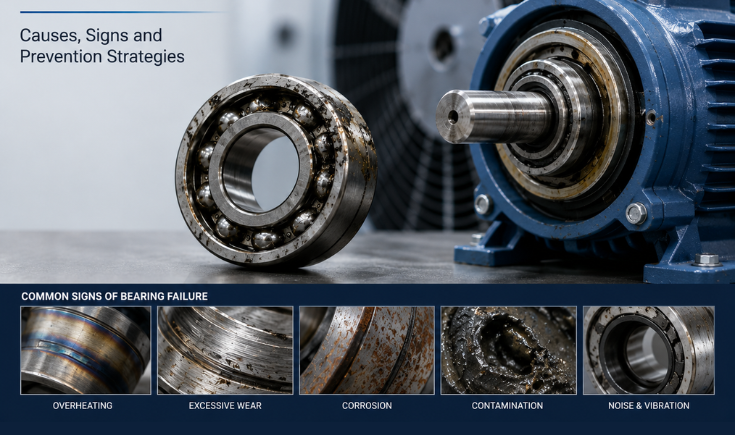
Despite their robust engineering, bearings remain a primary point of mechanical wear. Premature industrial fan bearing failure is one of the most frequent causes of unplanned facility downtime, steep repair bills, and critical operational bottlenecks. Gaining a complete understanding of why heavy-duty fan bearings fail, recognizing early warning signs, and instituting proper maintenance protocols can extend equipment life and safeguard operational efficiency.
Primary Causes of Bearing Failure in Industrial Fans
Bearings are precisely engineered elements designed to last for years if properly maintained. However, several environmental and mechanical variables can accelerate localized stress and cause early degradation:
1. Inadequate or Faulty Lubrication
Lubrication issues account for a large percentage of premature bearing issues. This occurs in two distinct ways:
- Under-Lubrication: Insufficient grease allows direct metal-to-metal contact between rolling elements and races, inducing intense frictional heating and micro-welding.
- Over-Lubrication: Pumping excess grease fills the bearing cavity entirely, forcing rolling elements to churn blindly through the lubricant. This leads to elevated internal temperatures, grease degradation, and seal failure.
2. Severe Contamination
Industrial processing environments are frequently laden with airborne particulates, fine process dust, and atmospheric moisture. If the bearing seals wear down or are improperly specified, these external contaminants breach the internal housing. Abrasive particulates quickly turn the lubricant into a grinding paste, wearing down internal rolling tracks, while moisture prompts localized pitting corrosion.
3. Shaft Misalignment and System Unbalance
When a heavy-duty exhaust fan or centrifugal blower is initially installed or serviced, the drive shaft must align perfectly with the motor. Minor structural offsets introduce uneven cyclic forces across the bearing elements. Similarly, structural dust accumulation on the fan impeller blades causes mechanical unbalance, generating destructive dynamic vibrations that over-stress bearing cages.
4. Thermal Overloading
Fans transporting high-temperature process gas transfer intense thermal energy down the drive shaft. If the selected fan configuration lacks specialized heat-slinger discs, cooling wheels, or high-temperature lubricants, the internal bearing grease thins out, breaks down chemically, and flows out of the housing, leaving components exposed to high thermal stress.
Critical Warning Signs to Track
Catastrophic mechanical failure rarely occurs without prior warning indicators. Maintenance technicians should actively monitor for these primary warning signs during routine facility walk-throughs:
| Warning Sign | Underlying Cause | Corrective Action Required |
|---|---|---|
| Excessive Noise (Squealing/Grinding) | Lack of lubrication, fatigue pitting, or internal components scraping. | Shut down fan immediately; inspect internal tracks and verify grease consistency. |
| Elevated Vibration Levels | Shaft misalignment, dynamic impeller unbalance, or loose housing mounts. | Perform precision laser alignment and dynamic balancing routines. |
| Housing Temperature Spikes | Over-lubrication churning or heavy structural friction from internal wear. | Check grease levels; use thermal imaging to assess temperature anomalies. |
Effective Preventive Maintenance Strategies
Maximizing the operational lifespan of heavy duty fan bearings requires a structured, proactive maintenance plan rather than a reactive strategy:
- Implement Routine Lubrication Calendars: Follow a precise schedule detailing exact lubricant types, quantities, and intervals tailored specifically to your fan's speed and heat metrics.
- Utilize Vibration Analysis Tools: Periodically gather structural baseline signatures to spot inner-race or outer-race micro-cracks long before they escalate into structural failure.
- Keep Impeller Assemblies Clean: Periodically clear dust accumulation off the fan blades to preserve dynamic balance and isolate the bearing from uneven dynamic loads.
- Select High-Quality Components: Partner with established engineering manufacturers who specify premier grade seals and premium housings for demanding industrial applications.
Conclusion
Industrial fan bearing failure can disrupt production lines, but it is highly preventable with proper maintenance. By understanding the root causes—such as improper lubrication, dust contamination, thermal loads, and unbalance—facilities can shift from emergency repairs to predictable, managed maintenance cycles.
Ensuring long-term reliability begins with high-quality equipment. Alfa Fans specializes in manufacturing robust, heavy-duty industrial fans engineered with precision bearing assemblies and specialized seals designed for severe industrial environments. Investing in proper industrial fan maintenance and top-tier equipment keeps your ventilation systems running smoothly for years to come.