
- Dubai,
United Arab Emirates - +91 88 5002 0455
info@alfafans.in

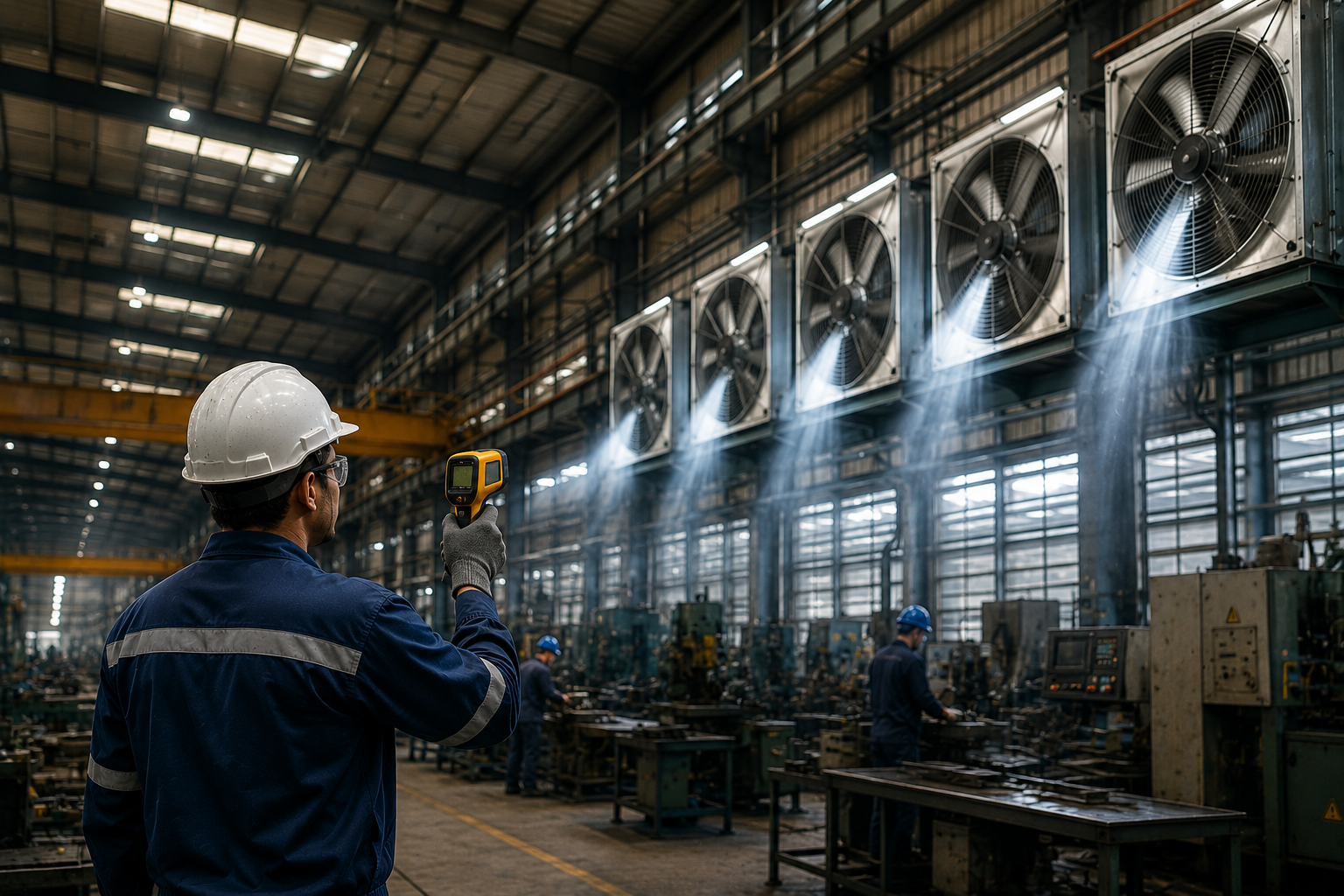
In manufacturing and industrial facilities, "hot spots" are localized zones where
temperatures spike significantly above the rest of the floor. These are typically caused by
heat-generating machinery, poor airflow, solar heat gain, or thermal stratification.
Eliminating them is critical for worker safety, equipment longevity, and overall
productivity.
Here is a strategic approach to neutralizing hot spots using industrial ventilation systems.
1. Implement High Volume Low Speed (HVLS) Fans
Hot air naturally rises to the ceiling, creating a thermal gradient (stratification). In
high-bay manufacturing plants, this trapped heat accumulates and radiates back down onto the
floor.
The Solution: Ceiling-mounted HVLS fans and Air
Circulators gently push massive volumes of air downward, mixing the hot ceiling air
with the cooler floor-level air. This destratification balances the temperature across the
entire facility and creates a perceived cooling effect of up to 10°F (5-6°C) for workers on
the floor, effectively erasing broad hot spots.
2. Deploy Man Coolers for Targeted Relief
Some machinery—like furnaces, compressors, or heavy fabrication stations—generates intense,
localized heat that a ceiling fan alone cannot combat.
The Solution: Heavy-duty man coolers (industrial pedestal or
wall-mounted fans) are designed to deliver high-velocity, directional airflow exactly where
it’s needed. By positioning these fans near specific workstations, you blast away stagnant
hot air and provide immediate evaporative cooling for the operators in that specific zone.
3. Extract Trapped Heat with Roof Extractors
If you only circulate the air inside the plant, you are eventually just moving hot air
around. The heat generated by industrial processes needs an escape route.
The Solution: Install industrial roof extractors or heavy-duty exhaust fans directly above known hot spots.
These systems actively pull the rising hot air, fumes, and humidity out of the building,
preventing the heat from accumulating and radiating downward.
4. Utilize Centrifugal and Tube Axial Fans for Ducting
Sometimes a hot spot is located deep within a facility layout where roof access is limited,
or fresh air cannot naturally flow in.
The Solution: Centrifugal blowers and tube axial fans can be integrated with ductwork to actively
pump fresh, cooler outside air directly into an isolated hot spot. Conversely, they can be
used as Local Exhaust Ventilation (LEV) to siphon intense heat away from a specific machine
and vent it safely outdoors before it dissipates into the broader plant environment.
Beyond Airflow: Additional Mitigation Strategies
While industrial fans are the backbone of temperature control, pairing them with structural
adjustments yields the best results:
- Machine Shielding: Install radiant heat shields or thermal insulation blankets
around ovens, boilers, and high-friction machinery to physically block the heat from
entering the workspace.
- Insulation & Radiant Barriers: Upgrade roof insulation or apply reflective coatings
to prevent solar heat from penetrating the building during peak summer hours.
- Equipment Maintenance: A motor or compressor running hot is often a sign of
mechanical wear. Regular lubrication and maintenance reduce the ambient heat machines emit.
Big Industrial Fan Manufacturer In India-Alfa Fans | A Simple Guide to keep your Industrial Fans clean | Materials used in Industrial Fans